
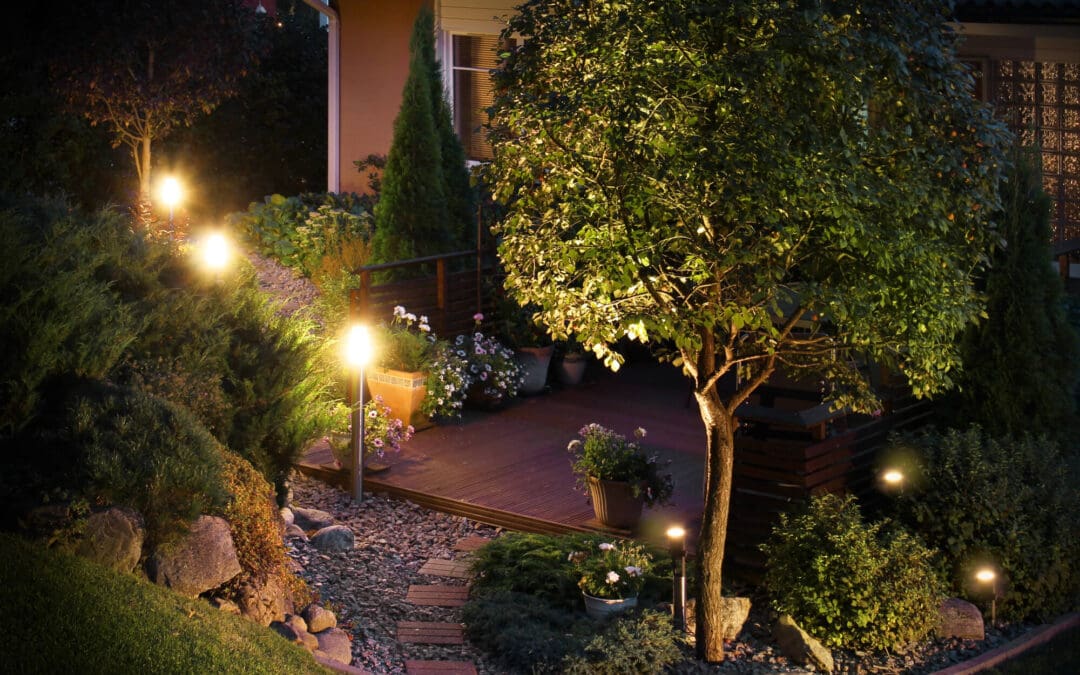
Great exterior lighting does more than just illuminate your driveway. It shapes the way your home looks after dark, improves safety for everyone coming and going, and adds a layer of security that discourages would-be intruders. Whether your current setup is outdated, insufficient, or simply nonexistent, improving your exterior lighting is one of the most rewarding upgrades a homeowner can make.
Why Exterior Lighting Is About More Than Just Visibility
Think of your exterior lighting in three layers: security lighting that covers dark corners and entry points, task lighting that makes pathways and steps safe to navigate, and accent lighting that adds visual depth and character to your landscaping and facade. Getting all three working together is what separates a well-lit home from one that’s simply got the lights on.
Start With a Safety and Security Assessment
Before adding anything new, walk your property after dark and make an assessment of what you’re working with. Where are the dark spots? Which entry points are poorly lit? Are your pathways easy to navigate safely at night, or are steps and uneven surfaces hidden in shadow? Motion-activated lights are an excellent addition to any security-focused exterior lighting plan. Positioned at garage doors, side entrances, and the back of the house, they respond instantly to movement and are far more effective at startling potential intruders than static lights that can be anticipated and avoided. They also save energy by only running when needed.
Choosing the Right Exterior Lighting Fixtures
Once you know where light is needed, choosing the right fixtures makes all the difference. For entryways and porches, wall-mounted lanterns or sconces create a welcoming look while providing solid task lighting. For pathways and garden borders, low-voltage landscape lights or solar stake lights are easy to install and require no wiring at all. Floodlights are the workhorses of exterior lighting, powerful, broad, and ideal for covering large areas like driveways and backyards. For a more polished look, well lights or uplights can be directed at trees, architectural features, or the face of the home itself to create dramatic nighttime curb appeal. When it comes to bulbs, LED is the clear choice. LED bulbs use a fraction of the energy of older incandescent options, last significantly longer, and perform reliably in all weather conditions.
Layer Your Lighting for Maximum Impact
The most visually striking exterior lighting setups use multiple light sources at different heights and angles rather than relying on a single bright fixture. Combining overhead security lighting with lower pathway lights and subtle accent uplighting eliminates harsh shadows, creates depth, and makes your home look intentional and well-designed rather than just lit up. String lights along a fence or pergola add warmth to outdoor living spaces, while recessed soffit lights under eaves provide a clean, modern look. Small details like these are what elevate a good exterior lighting scheme into a great one.
Smart Controls Make Exterior Lighting Effortless
Modern exterior lighting doesn’t have to be managed manually. Timer switches, dusk-to-dawn sensors, and smart lighting systems let you automate when and how your lights operate so your home is well-lit without you having to think about it. Smart systems let you control individual fixtures, set schedules, and adjust brightness from your phone. For a simpler, lower-cost option, dusk-to-dawn sensors switch lights on at sunset and off at sunrise automatically, reliably, efficiently, and completely hands-off.
Frequently Asked Questions (FAQs)
How many exterior lights does a home typically need?
There’s no fixed number; it depends on the size of your home and yard. Plan for lighting at every entry point, along all pathways, and in any dark corners around the perimeter. Accent and decorative lighting can be added from there based on your goals and budget.
Are solar exterior lights worth it?
Solar lights have improved significantly and are a great option for pathways, garden borders, and decorative accents where consistent brightness isn’t critical. For security lighting or areas needing reliable, powerful illumination, hardwired or low-voltage wired systems are the more dependable choice.
What color temperature is best for outdoor lighting?
Warm white light (2700K to 3000K) is the most popular choice; it’s inviting, flattering to most home exteriors, and creates a comfortable atmosphere. Cooler white light (4000K and above) works better for security and task areas where brightness and clarity matter more than aesthetics.
How do I improve exterior lighting without rewiring?
Solar-powered and low-voltage landscape lighting systems are wire-free options that can dramatically improve your outdoor lighting without electrical work. Motion-sensor plug-in fixtures and smart bulbs in existing fixtures are also easy upgrades that require no rewiring at all.
Does exterior lighting really deter burglars?
Research consistently shows that well-lit homes are less attractive targets. Motion-activated lights are particularly effective because they draw attention to movement and eliminate the cover of darkness. Combining good exterior lighting with cameras, locks, and timers gives you the strongest overall deterrent effect.
Wild Rose Property Inspection provides professional home inspection services to customers in the Alberta area. If you’re buying or selling a property, contact us to request an appointment.